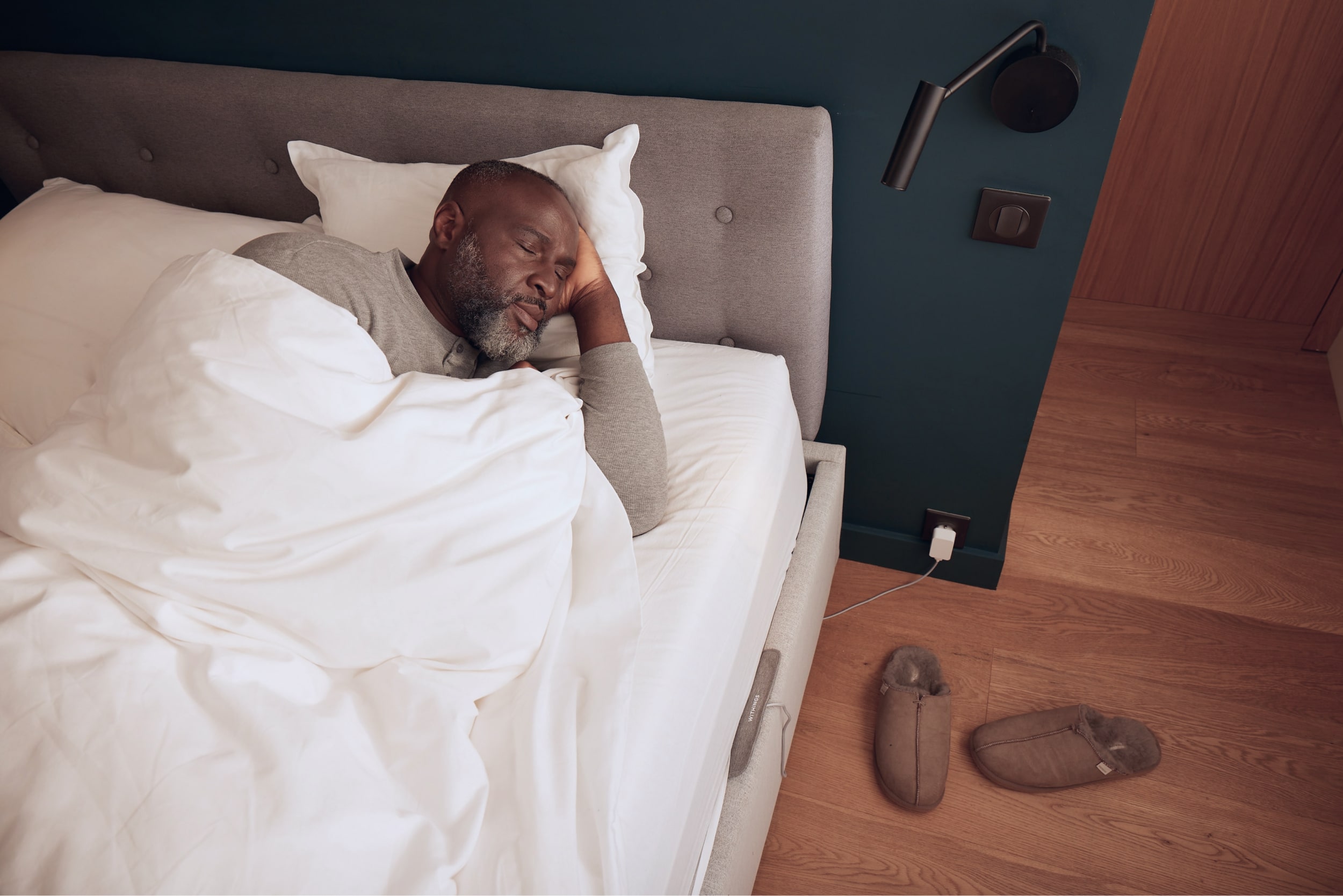
What are the benefits of sleep tracking
Discover the benefits of sleep tracking with Withings sleep trackers. Learn how tracking your sleep quality at home can help you improve...
Research

Last edit: January 27, 2026
January 26, 2026
Intermittent fasting—specifically the popular 16:8 method (fasting for 16 hours and eating during an 8-hour window)—is more than just a trend. It’s a lifestyle many of us adopt to improve insulin sensitivity, manage weight, and boost cellular repair.
But a question often keeps our community up at night: "Will changing when I eat ruin how I sleep?"
A new study¹ published in Medicine (2025) set out to answer exactly that. Researchers followed 35 healthy adults using the Withings ScanWatch to see how a 16:8 fasting routine affects sleep, heart rate, and activity levels.
The results offer exactly the "green light" many of you have been waiting for.
For many, the fear of "hunger-induced insomnia" is real. However, the data told a different story. Using ScanWatch’s medical-grade sensors, researchers found that:
- Sleep architecture remained intact: There were no significant changes in sleep parameters. Your brain continues its vital recovery work, even when your stomach is empty.
- No midnight toss-and-turn: Both the number of nocturnal awakenings and the time it took to fall asleep (sleep latency) remained stable.
- Heart health on autopilot: Average heart rate and heart rate variability (HRV) parameters remained consistent, suggesting that the body doesn’t enter a "stress state" during a short-term 16:8 fast.
One of the most impressive findings concerned daily energy levels. Some worry that fasting leads to lethargy, but the ScanWatch data proved otherwise:
- Daily steps: Activity remained stable at an average of ~7,500 steps.
- Energy expenditure: Both resting metabolic rate and active calories burned stayed consistent. Your body adapts beautifully, maintaining its energy output throughout the day.
This study is a testament to the power of objective data. While 37% of participants subjectively felt they had only “moderate” sleep quality at the start, the data provided clinical proof that their physiology actually remained healthy and balanced throughout the fasting period.
Ultimately, clearly interpreted objective data does more than just track numbers—it acts as a true catalyst for sustainable behavioral change.
¹Strüven A, Schlichtiger J, Hoppe JM, Thiessen I, Kellnar A, Stremmel C. Impact of intermittent fasting on sleep physiology: A prospective observational study using smartwatch technology. Medicine (Baltimore). 2025 Aug 8;104(32):e43800. doi: 10.1097/MD.0000000000043800. PMID: 40797465; PMCID: PMC12348416.
Any medical intervention or medical data interpretation, including changes to diet or lifestyle, should always be undertaken under the guidance of a qualified healthcare professional in a trusting, collaborative patient-doctor partnership.
What are the benefits of sleep tracking
Discover the benefits of sleep tracking with Withings sleep trackers. Learn how tracking your sleep quality at home can help you improve...

Body fat percentage: Understanding and measuring body fat
Learn what body fat percentage is, how to measure it accurately, and discover healthy ranges and lifestyle tips to reduce excess body fat.

10 Expert Sleep Tips from Dr.
Having trouble falling—or staying—asleep? We asked a doctor who specializes in sleep to give us his top tips for a restful night.

Join millions of users who are improving their health with Withings. Sign up to discover the entire Withings ecosystem, our latest products, and exclusive offers.
By registering, you agree to receive advertising e-mails from Withings. However, if you change your mind, you can unsubscribe at any time.
